


I just read another Walter Reed paper. Posted yesterday, August 26, 2026 in Frontiers in Neurology.
Marshall K, Sullivan K, French LM. Clinical presentation and engagement with a cognitive rehabilitation clinic in individuals reporting anomalous health incidents. Front Neurol. 2026;17:1858023. https://doi.org/10.3389/fneur.2026.1858023
Just a few days ago it was a Xeomin (“Botox”) study for leftover headache in AHI. Today it is BrainHQ (a computer program of brain-training games) for leftover cognitive complaints in AHI. Same problem as before: they report how they treat AHI. They still will not name a diagnosis.
What do we know about the AHI group of 40 patients? Look at Table 1.
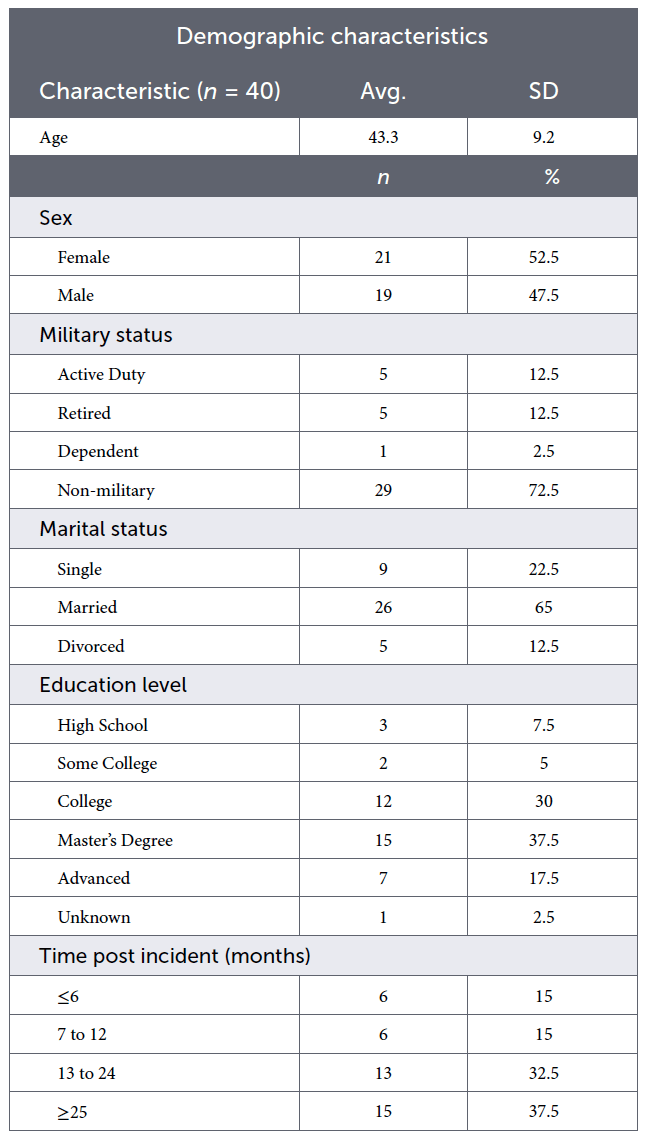
That one dependent is a civilian who is not a federal employee. Where did the AHI happen? The paper didn’t say. How did they get the AHI label? Through “varying internal protocols.” There is no way to say which ones were AHI Type 1 and which were AHI Type 2. This lack of rigor, and lack of a medical diagnosis, would not fly in public medicine. Remember, AHI by itself is just an administrative label.
Treatment was BrainHQ (brain-training games on the computer). Some test scores moved, but every self-report scale they published stayed flat: headache impact, mood, anxiety, PTSD checklist, the neurobehavioral inventory.
What does all this mean for civilians already diagnosed with Havana Syndrome, and those who can’t go through the diagnostic process?
Federal employees have a case definition, diagnostic guidance, a reporting system, and treatment. Civilian physicians still have no public case definition for the patient who walks in off the street.
The gap is real.
BER v. CDC is set to close this gap.
I don’t believe they can’t see the patient being hit with direct energy on a screen. They can measure all types of rays we can’t see. Come on? They probably saw the same stuff with electronic harassment. 🙏
Thank you Len , next month I will send something to help you and your efforts .